
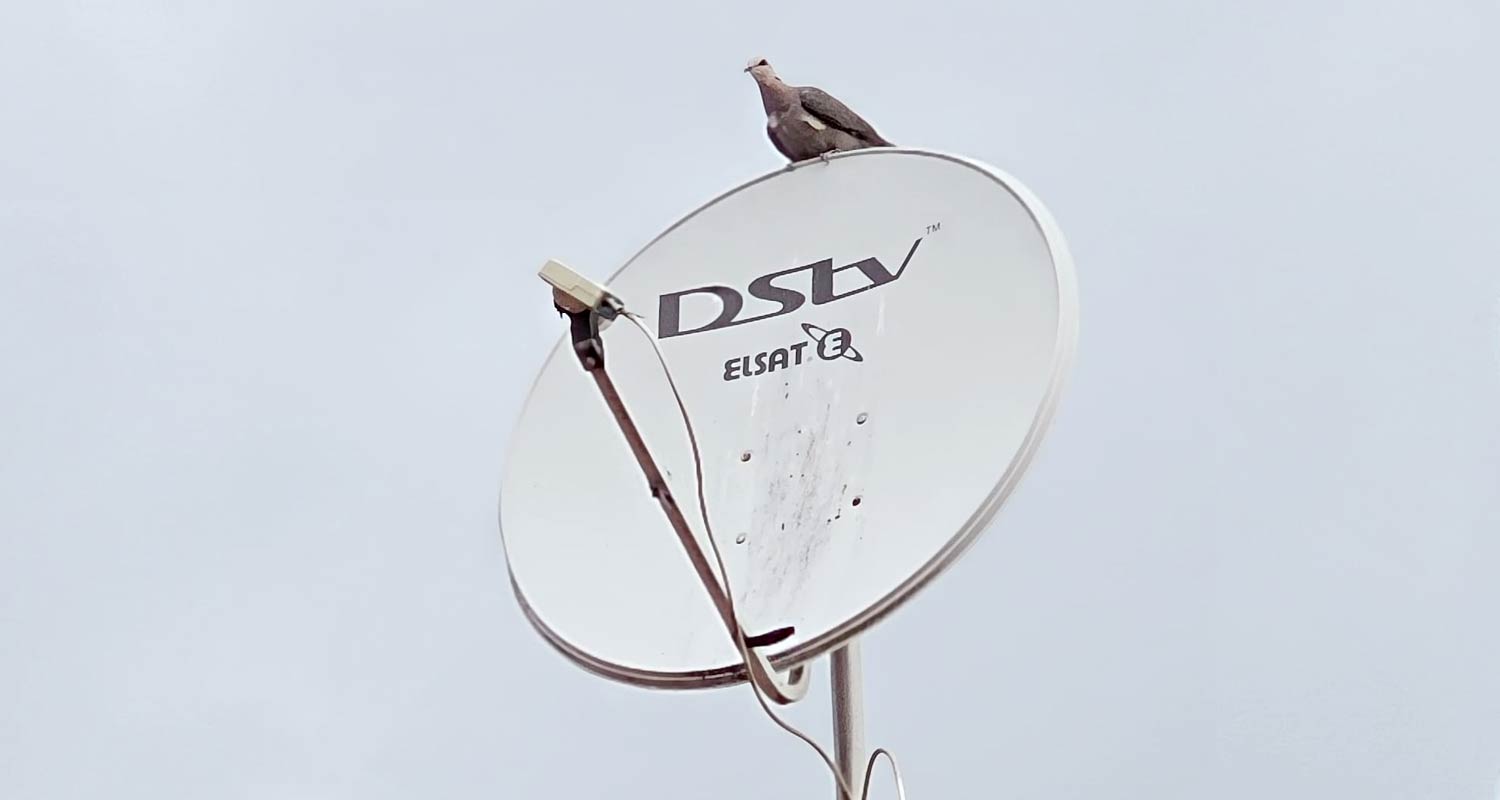
It is the most reasonable question in South African television. You watch maybe eight channels. You are paying for 160. Why can't you just pick the eight?
The short answer is that channels are not sold to broadcasters the way they are sold to you, and a per-channel market would be priced very differently to the per-bundle one. This is not a defence of DStv's pricing — there are fair criticisms to make. But "let us pick our channels and it will be cheaper" is an assumption worth testing, because in most markets where it has been tried, it was not.
1. DStv does not own most of the channels it carries
MultiChoice owns and produces some channels — M-Net, the Mzansi Magic family, kykNET, SuperSport. Many others are licensed from international owners: Discovery, BBC, Disney, Nickelodeon, Sony, and so on.
Those licences are negotiated as carriage agreements, and they routinely include terms about which package a channel must appear in and how many subscribers must be able to receive it. A channel owner wants maximum reach, because reach is what they sell to advertisers. A deal that lets subscribers individually opt out of a channel destroys the reach guarantee the deal was priced on.
So the constraint is often not MultiChoice's preference. It is a contractual term that MultiChoice agreed to in order to carry the channel at all.
2. Channels are usually bought in groups
Content owners rarely sell single channels. A studio with one channel you want will typically bundle it with three you do not, and price the group. Refusing the group means losing the one you wanted.
This is why a broadcaster's line-up always contains channels that seem to have no audience. They are not there because someone thought you would watch them. They are there because they arrived attached to something else.
3. The advertising side depends on reach
Many channels earn revenue twice: a carriage fee from the broadcaster, and advertising sold against their audience. Advertising rates are set on how many households can see the channel. Halve the reach and the advertising revenue falls, which means the channel needs a higher carriage fee to stay viable — which means a higher price for the people who did select it.
4. The subscriber economics of à la carte
This is the part that surprises people. Bundling works because it spreads fixed costs across everybody.
Say a channel costs R100 million a year to license and carry. Across two million subscribers, that is roughly R4.20 per subscriber per month. Now sell it individually and suppose 300,000 people choose it. The same R100 million now falls on 300,000 people — about R28 per subscriber per month, before margin, before billing costs, before the platform.
Run that across a shortlist of eight popular channels and the individual prices add up quickly. International experience with à la carte and "skinny bundle" pay-TV has repeatedly landed in the same place: a handful of channels priced individually costs close to, or more than, a bundle containing many.
Bundling means you pay a little for a lot of things you do not watch. À la carte means you pay a lot for the few things you do. Which is cheaper depends entirely on how many channels you actually want — and most households want more than they think once the family is counted.
5. Sport is the extreme case
Sports rights are bought in blocks for fixed periods at enormous cost, and the value is concentrated in a small number of live events. SuperSport currently holds Sub-Saharan Africa Premier League rights through 2027/28, exclusive United Rugby Championship rights extended in June 2026, the PSL, the 2027 and 2029 Rugby World Cups and a Cricket South Africa deal to the end of 2026/27.
Those costs are fixed whether one household subscribes or five million do. If sport is sold separately, the cost falls only on sports viewers — which is precisely why the reported R399 sports package is interesting, and why its exact contents matter so much. We look at that in our R399 sports package explainer.
6. What has actually changed
MultiChoice has publicly said, through Canal+ after the July 2026 acquisition, that it wants to simplify DStv's package structure and make it easier for customers to understand, with more affordable entry points. That is a statement of intent about bouquets, not about channel-level selection.
On channel-level selection specifically, MultiChoice has made no public statement either way — it has neither ruled à la carte out nor committed to it. Anyone telling you MultiChoice has "refused" or "promised" pick-your-own-channels is going beyond the public record.
What has changed in practice is the arrival of narrower bundles — a sports-only package, a movies-and-series package — which is the realistic middle ground between one giant bouquet and 160 individual line items. Our guide to the reported package changes covers where that appears to be heading.
What you can control
You cannot pick your channels. You can stop paying for capacity you do not use:
- Additional decoders each carry a monthly access fee. If one is dormant, that is the easiest saving available — see how Extra View actually works.
- Downgrading a bouquet is instant and reversible. Many households sit on Premium out of inertia between sports seasons.
- If the reason you upgraded was picture quality rather than content, you upgraded for the wrong reason. Pixelation and dropouts are signal faults, and no bouquet fixes them.
And if you are moving, take the decoder and subscription with you rather than starting fresh — our relocation service handles the dish and re-alignment at the new address.